Whether you're dealing with chronic pain, exploring fertility support, or looking for natural alternatives, we're here to help. Schedule a consultation and let's talk about your goals.
(832) 797-7343
How Acupuncture Works
What Is Acupuncture and How Does It Work?
Acupuncture involves inserting thin needles at specific points to relieve pain and treat various conditions.
Quick Answer
Acupuncture is a treatment in which a licensed practitioner inserts thin, sterile needles into specific points on the body to stimulate the nervous system, reduce pain, and promote natural healing. Modern research shows that acupuncture works by triggering the release of endorphins, modulating inflammation, and influencing neurotransmitter activity. The World Health Organization recognizes acupuncture as effective for over 40 conditions.
Acupuncture is a treatment in which a licensed practitioner inserts thin, sterile needles into specific points on the body to stimulate the nervous system, reduce pain, and promote natural healing. Modern research shows that acupuncture works by triggering the release of endorphins, modulating inflammation, and influencing neurotransmitter activity. The World Health Organization recognizes acupuncture as effective for over 40 conditions. Learn more about how social proof and patient reviews help acupuncturists build trust with new clients.
How Acupuncture Works (Modern Understanding)
The National Center for Complementary and Integrative Health and World Health Organization state that acupuncture may have effects on the nervous system, direct effects on body tissues where needles are inserted, and nonspecific effects. Their website states. “In addition, studies have shown that acupuncture may alter brain chemistry by changing the release of neurotransmitters and neurohormones and, thus, affecting the parts of the central nervous system related to sensation and involuntary body functions, such as immune reactions and processes that regulate a person’s blood pressure, blood flow, and body temperature”.
This list is by no means exhaustive and multiple theories can, and most likely are in place during treatment.
When needles are inserted at specific points, several physiological responses occur:
Endorphin release: Acupuncture is able to promote endorphins and increase blood flow within the body, helping to increase circulation, healing mechanisms, and lymphatic flow. Endorphins are natural pain relievers found in the central nervous system, and acupuncture stimulates their release. Many attribute the healing power of acupuncture to the extra endorphins produced during the treatment. The body's natural painkillers are triggered, reducing pain perception.
Anti-inflammatory effects: Local inflammation is reduced through modulation of cytokines and immune cells
Nervous system regulation: Signals are sent through nerve pathways that modulate pain processing in the brain and spinal cord
Blood flow increase: Local circulation improves, promoting tissue healing
Neurotransmitter modulation: Serotonin, norepinephrine, and other brain chemicals are affected, influencing mood and pain
Neurochemical Responses: Another neurocentrice theory behind how the insertion of thin filiform needles into one’s skin can create positive changes within areas not limited to sleep, digestion, fertility, pain, and anxiety, is that the needles stimulate the release of neurochemicals within the body and that much of the change is mediated through the nervous system. The neurochemical mechanism explains changes that take place within the central nervous system during acupuncture, changes that are seen within neurotransmitters such as endogenous opioids, neuromodulators, and other hormones.
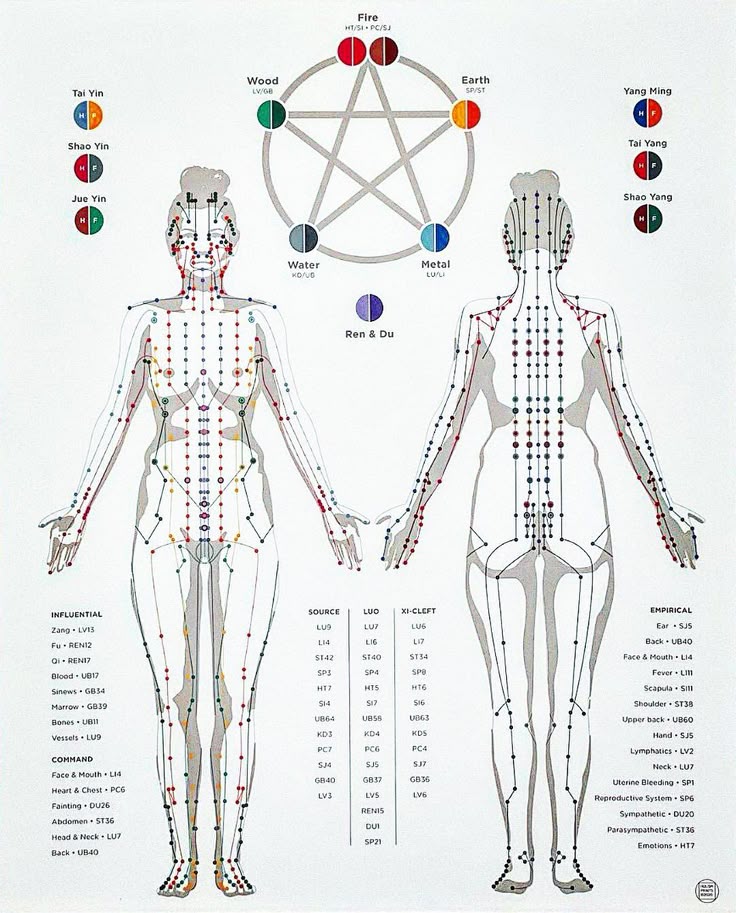
Qi Theory: This theory is based more upon ancient Asian ideas of balance and is constantly infused within the teachings of yin yang, meridians, and illness. The body’s Qi is both form and function and acupuncture is used to stimulate, tonify or reduce its activity within certain points that correlate to various organ systems. This is a complex theory and lays the basis of study within Traditional Chinese Medicine, and in my opinion is essential to understanding the “how: of this medicine.
Inflammatory Network: Many people believe “localized acupuncture-mediated anti-inflammatory” effects are the key to how acupuncture works, and research has been performed to support this theory. One such study published in The Journal of Inflammation Research, explains that many diseases are linked to the underlying issues of chronic inflammation and that acupuncture indeed has anti-inflammatory impacts on multiple physiological functions. This particular study dives into “underlying mechanisms from acupoint initiation to signal termination within the target organs via neuro-immune regulation.”
Gate Control Theory for Pain: (Segmental Effects) This theory is usually used to describe the effects of acupuncture on pain patterns. The gate control theory explains that pain may be modulated or changed by hyper stimulation analgesia created by acupuncture needles. The central nervous system regulates the pain response and a series of “gates” must be passed for the brain to perceive the pain. “Acupuncture helps in pain relief by stimulating the pain inhibitory nerve fibers, which lowers the pain input and therefore, relieves the pain. This can explain the effectiveness of acupuncture in short-term and acute pain conditions, explains one study performed by The Women’s Health and Research Center. Want to read more about this pain theory, check out this article by The Center for Integrated Health.
Autonomic Nervous System Regulation: When the autonomic nervous system is activated through the stimulation of acupuncture, the body can show alteration in heart rate, heart rate variability, blood pressure, and respiration, and regulation can be seen in the effects on smooth muscle, sleep quality, urinary issues, and sweat rate. Being able to regulate the autonomic nervous system, can help to decrease stress as well as regulate a large variety of bodily functions.
Homeostasis Promoting: Acupuncture is known to regulate the physiological state of the body. While this isn’t necessarily an underlying “mechanism of action” behind acupuncture and more of an observation. The studies behind these 100 conditions prove that acupuncture is able to promote positive changes and healing within the body.
Knowing what type of language to use when explaining acupuncture can be very important, as using words like Qi, energy, and meridians, may turn someone off to experiencing acupuncture, and this language may be best to be introduced to them after they have a few experiences, while other are looking for a more subtle explanation of acupuncture. Meeting patients where they are in their healing journey is a very important lesson when working with someone’s health.
The western scientific community is just really starting to understand the importance of the fascial network, meanwhile Chinese medicine has known about it for millennia, as seen within the comparison between the Superficial Dorsal Line fascial network and the bladder meridian for example. Thousands of years of practice and countless records, texts, and accounts of the benefits of acupuncture, withstanding the test o time is enough proof for it that it works, even though we may not know “why.”
Conditions Acupuncture Treats
Chronic pain: Back pain, neck pain, knee pain, and headaches (strong evidence)
Migraines: Comparable to medication for prevention, with fewer side effects
Nausea: Chemotherapy-induced and post-surgical nausea (strong evidence)
Anxiety and depression: Growing evidence supports acupuncture as a complementary treatment
Fertility support: Used alongside IVF and other fertility treatments
Allergies: Seasonal allergic rhinitis responds well in clinical trials
What to Expect at Your First Visit
Your acupuncturist will review your health history, examine your tongue and pulse (traditional diagnostic methods), and develop a treatment plan. During treatment, 5-20 thin needles are inserted and left in place for 30-45 minutes. Most patients feel little to no pain during insertion and report deep relaxation during the session. For practitioners looking to streamline patient intake and scheduling, industry-specific solutions can help manage your practice more efficiently.
FAQ
Does acupuncture hurt?
Most people feel minimal sensation during needle insertion -- a slight pinch or tingling. Acupuncture needles are hair-thin (0.25mm), much thinner than injection needles. Many patients fall asleep during treatment.
How many sessions do I need?
Acute conditions may improve in 4-6 sessions. Chronic conditions typically require 8-12 sessions for significant improvement, often starting with twice-weekly visits and tapering to maintenance.
Is acupuncture covered by insurance?
Coverage is expanding. Medicare now covers acupuncture for chronic low back pain up to 20 visits per year. Many private insurers cover 12-24 sessions per year. Check your specific plan for details.